Will a night light disrupt your child’s sleep?
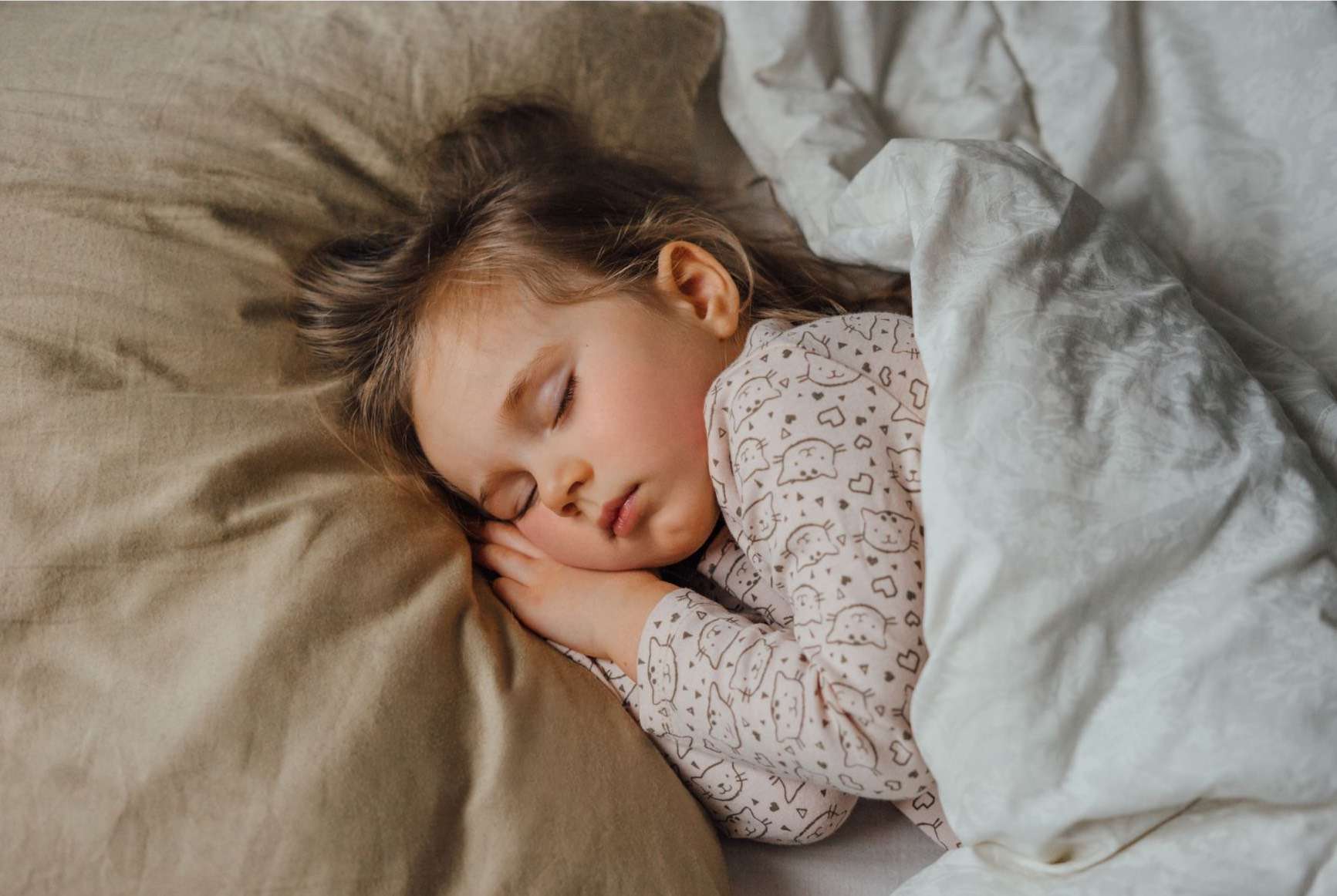
Worried about the effects of putting a night lamp in your child’s bedroom? Don’t worry – just make sure you choose the right one. Learn the difference here.
Not all light is equal. The negative effects of blue light have been widely discussed in recent years. But choosing the right type of light is not just about the color (or Kelvin) it’s about a whole array of things.
What light tells the child’s body
Dr. Charles Czeisler from Harvard Medical School in Boston, USA, has studied the human circadian rhythm and the effect that artificial light has on us. He has pointed out that light affects our sleep rhythm more than any medicine. This is because our bodies use light to set their inner clocks. Specifically, the color of light. The human body associates blue light with bright morning light whereas warm light with an orange hue signals sunset and time to go to bed. This matters when you want to make sure your child establishes a healthy sleep rhythm. The last thing you want to tell your child’s body before bedtime is that it’s time to get up. So, you should be skeptical about the light sources in your child’s bedroom.
Das richtige Kelvin
The first thing you need to know is the color temperature of any light in your child’s room. Color temperature is measured in degrees of Kelvin (K) on a scale from 1000 to 10,000. At 2000K to 3000K the light produced is called “warm white” and ranges from orange to “yellow white” in appearance. Color temperatures between 3100K and 4500K are referred to as “cool white” or “bright white.” Light bulbs within this range will emit a more neutral white light and may even have a slightly blue tint. Above 4500K brings us into the “daylight” color temperature of light. Light bulbs with color temperatures of 4500K and above will give off a blue-white light that mimics daylight. Research has shown that exposure to light, particularly blue light, can suppress the production of melatonin in children. Blue light is the type of light that is emitted by electronic devices such as smartphones, tablets, and computers but also cold white spotlights LEDs, or lamp bulbs. The suppression of melatonin can lead to difficulty falling asleep, disrupted sleep patterns, and decreased sleep quality. Any night light should ideally be between 2000K and 3000K. For reference umilumi lamps are 2700K.
Wie hell sollte ein Nachtlicht sein?
If a night light is too bright, it can be disruptive to sleep. It is important to choose a night light that emits a dim and soft light, so it doesn’t disturb the child’s sleep. The problem is that the luminosity of light is perceived differently throughout the day. Many parents have had the experience of buying a night light for their child’s bedroom, turning it on in the evening and perceiving it as a pleasant dim light, and then entering the room at night and having a very different experience. The night light seems entirely too bright for the dark room. That is because our eyes have adjusted to the darkness. Often this is a source of frustration for parents because they then must turn off the night light and when the child wakes at night, it won’t see a comforting light. This is why any night light should always be dimmable. All umilumi lamps can be dimmed from a setting where they can be used as a reading lamp to one where only the outline of the child is visible at night. This makes it versatile. The child will experience it as a constant companion without the lamp disrupting their healthy sleep pattern.
Sollte ich ein Nachtlicht benutzen?
In summary, the effect of night light on children’s sleep can vary depending on various factors. If a child is afraid of the dark, a dim and warm-colored night light may help provide a sense of security without interfering with sleep. However, if night light is too bright or emits blue light, it may interfere with melatonin production and disrupt sleep. Ultimately, it’s important to find the right balance between comfort and sleep quality when deciding whether to use a night light in a child’s bedroom.
Die Sache mit dem Schlafen
Improving your child’s sleep is the best investment in your family’s health.
Stehen Sie des öfteren nachts auf, um ein verängstigtes Kleinkind zu trösten, oder bekommen Besuch von einem umherstreifenden Vorschulkind? Keine Sorge, Sie sind nicht allein. Nach Angaben der American Academy of Pediatrics (AAP) bekommt ein Viertel der Kinder unter 5 Jahren nicht ausreichend Schlaf, und das ist ein Problem für die ganze Familie. Schlafmangel wirkt sich negativ auf die Stimmung, Konzentrationsfähigkeit und kognitiven Leistungen Ihres Kindes aus, und wird mit vielen gesundheitlichen Problemen im späteren Leben in Verbindung gebracht. Gleichzeitig ist es eine enorme Belastung für die ganze Familie, die oft zu einem erhöhten Stresspegel führen kann.
Kein schlechtes Gewissen
Bevor Sie sich von den Schlafgewohnheiten Ihres Kindes überfordert und entmutigt fühlen sollten Sie wissen, dass die meisten Kinder irgendwann mal mit Schlafproblemen zu kämpfen haben. Die American Academy of Family Physicians hat dieses Phänomen untersucht und ist zu dem Schluss gekommen, dass frühzeitige Erkennung von Schlafproblemen negative Folgen wie Tagesmüdigkeit, Reizbarkeit, Verhaltensstörungen, Lernschwierigkeiten und schlechte schulische Leistungen verhindern kann. Mit anderen Worten: das Erkennen des Problems ist der erste Schritt zu dessen Lösung.
Tipps zur Verbesserung des Schlafs
Wenn es um Schlaf geht, gibt es keine Wunderheilung über Nacht. Laut Sleep Foundation kann man aber vieles tun, um die Schlafqualität mit der Zeit deutlich zu verbessern. Die meisten dieser Maßnahmen haben mit dem Lebensstil zu tun. Als besonders vorteilhaft wird die Einführung einer strengen Schlafroutine betrachtet. Hier sind einige der Empfehlungen der Sleep Foundation, um den eigenen Schlaf und den Ihrer Kinder deutlich zu verbessern.
- Gesunde Ernährung
- Regelmäßige Einschlafzeit einhalten
- Helle Lichter und Bildschirme ausschalten
- Put on pyjamas and brush teeth
- Lesen Sie ein einfaches Buch vor, singen ein Lied oder lassen Sie das Kind vor dem Schlaf in der Badewanne entspannen
- Stellen Sie den Thermostat im Kinderzimmer auf eine etwas kühlere Temperatur
- Verwenden Sie abgedunkelte Vorhänge, um den Lichteinfall von Außen zu minimieren und ein Nachtlicht um die Angst Ihres Kindes vor der Dunkelheit zu verringern
- Verwenden Sie Rauschgeräte, um störende Nebengeräusche so gut wie möglich auszublenden
- Vermeiden Sie große Mahlzeiten und zuckerhaltige Leckereien vor dem Schlafengehen
Dies sind alles kleine Schritte die Sie unternehmen können, um das Schlaf- und Stressniveau Ihrer Familie zu verbessern.