Will a night light disrupt your child’s sleep?
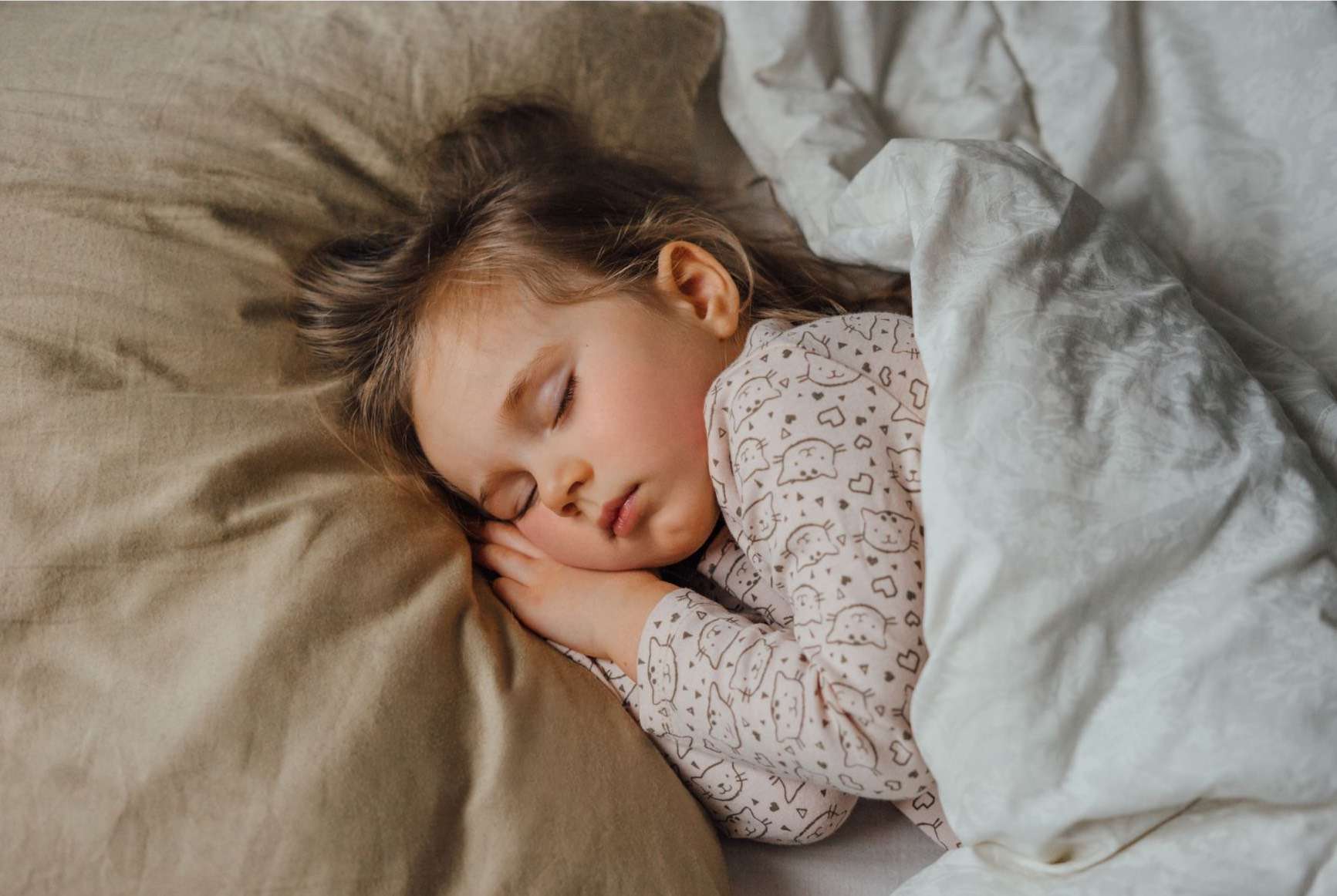
Worried about the effects of putting a night lamp in your child’s bedroom? Don’t worry – just make sure you choose the right one. Learn the difference here.
Not all light is equal. The negative effects of blue light have been widely discussed in recent years. But choosing the right type of light is not just about the color (or Kelvin) it’s about a whole array of things.
What light tells the child’s body
Dr. Charles Czeisler from Harvard Medical School in Boston, USA, has studied the human circadian rhythm and the effect that artificial light has on us. He has pointed out that light affects our sleep rhythm more than any medicine. This is because our bodies use light to set their inner clocks. Specifically, the color of light. The human body associates blue light with bright morning light whereas warm light with an orange hue signals sunset and time to go to bed. This matters when you want to make sure your child establishes a healthy sleep rhythm. The last thing you want to tell your child’s body before bedtime is that it’s time to get up. So, you should be skeptical about the light sources in your child’s bedroom.
Den rätta Kelvin
The first thing you need to know is the color temperature of any light in your child’s room. Color temperature is measured in degrees of Kelvin (K) on a scale from 1000 to 10,000. At 2000K to 3000K the light produced is called “warm white” and ranges from orange to “yellow white” in appearance. Color temperatures between 3100K and 4500K are referred to as “cool white” or “bright white.” Light bulbs within this range will emit a more neutral white light and may even have a slightly blue tint. Above 4500K brings us into the “daylight” color temperature of light. Light bulbs with color temperatures of 4500K and above will give off a blue-white light that mimics daylight. Research has shown that exposure to light, particularly blue light, can suppress the production of melatonin in children. Blue light is the type of light that is emitted by electronic devices such as smartphones, tablets, and computers but also cold white spotlights LEDs, or lamp bulbs. The suppression of melatonin can lead to difficulty falling asleep, disrupted sleep patterns, and decreased sleep quality. Any night light should ideally be between 2000K and 3000K. For reference umilumi lamps are 2700K.
Hur ljus ska en nattlampa vara?
If a night light is too bright, it can be disruptive to sleep. It is important to choose a night light that emits a dim and soft light, so it doesn’t disturb the child’s sleep. The problem is that the luminosity of light is perceived differently throughout the day. Many parents have had the experience of buying a night light for their child’s bedroom, turning it on in the evening and perceiving it as a pleasant dim light, and then entering the room at night and having a very different experience. The night light seems entirely too bright for the dark room. That is because our eyes have adjusted to the darkness. Often this is a source of frustration for parents because they then must turn off the night light and when the child wakes at night, it won’t see a comforting light. This is why any night light should always be dimmable. All umilumi lamps can be dimmed from a setting where they can be used as a reading lamp to one where only the outline of the child is visible at night. This makes it versatile. The child will experience it as a constant companion without the lamp disrupting their healthy sleep pattern.
Bör jag använda en nattlampa?
In summary, the effect of night light on children’s sleep can vary depending on various factors. If a child is afraid of the dark, a dim and warm-colored night light may help provide a sense of security without interfering with sleep. However, if night light is too bright or emits blue light, it may interfere with melatonin production and disrupt sleep. Ultimately, it’s important to find the right balance between comfort and sleep quality when deciding whether to use a night light in a child’s bedroom.
Jakten på en god natts sömn
Improving your child’s sleep is the best investment in your family’s health.
Går du alltför ofta upp på natten för att trösta ett rastlöst barn, eller blir din säng ofta invaderad av ett olyckligt förskolebarn? Då är du inte ensam. Enligt American Academy of Pediatrics (AAP) får en fjärdedel av alla barn under 5 år inte tillräckligt med sömn, och det är ett problem för hela familjen. Dålig sömn påverkar barnets humör, förmåga att fokusera och kognitiva prestationer negativt och har kopplats till många hälsoproblem senare i livet. Men det är också en stor belastning för hela familjen eftersom dålig sömn leder till ökade stressnivåer i hela familjen.
Känn dig inte skyldig
Men innan du känner dig överväldigad och avskräckt av ditt barns sömnvanor är det viktigt att komma ihåg att de flesta barn har perioder av orolig sömn. American Academy of Family Physicians har studerat fenomenet och kommit fram till att tidig behandling av sömnproblem kan förebygga negativa konsekvenser som irritabilitet, beteendeproblem, inlärningssvårigheter och dåliga skolresultat. Att erkänna problemet är därför det första steget till att lösa det.
Verktyg för att förbättra sömnen
När det gäller sömn finns det inga mirakel, men enligt The Sleep Foundation finns det många saker du kan göra för att avsevärt förbättra sömnkvaliteten med tiden. De flesta av dem har att göra med livsstilsval. Sleep Foundation pekar särskilt på fördelarna med att upprätta en regelbunden rutin vid sänggåendet. Här är några av deras rekommendationer för att förbättra sömnen.
- Hälsosam kost
- En fast rutin vid sänggåendet
- Stäng av alla skärmar och starka lampor
- Put on pyjamas and brush teeth
- Läs en bok, sjung en sång eller ta ett bad
- Sänk värmen i ditt barns rum
- Använd mörkläggningsgardiner och eventuellt en nattlampa
- Se till att det är tyst i sovrummet, eller använd vitt brus för att överrösta bakgrundsljud om det behövs
- Undvik stora måltider eller söta mellanmål före sänggåendet
Detta är relativt små förbättringar som du enkelt kan göra för att få bättre sömn och lägre stressnivåer för hela familjen.